

Imagine this: you run a manufacturing SME in a Canadian city. Your warehouse is overflowing with seasonal surplus, and every idle pallet is cash tied up. Meanwhile, in another Canadian town, a family is eagerly looking for bargains to furnish their new home.
Between these two realities lies a thriving market that generates hundreds of millions of dollars annually in Canada: warehouse sales.
This economic phenomenon, deeply embedded in our commercial culture, goes far beyond the outdated image of Saturday morning bargain hunters. Today, warehouse sales represent a complex ecosystem involving businesses of all sizes, specialized organizers, and thousands of jobs.
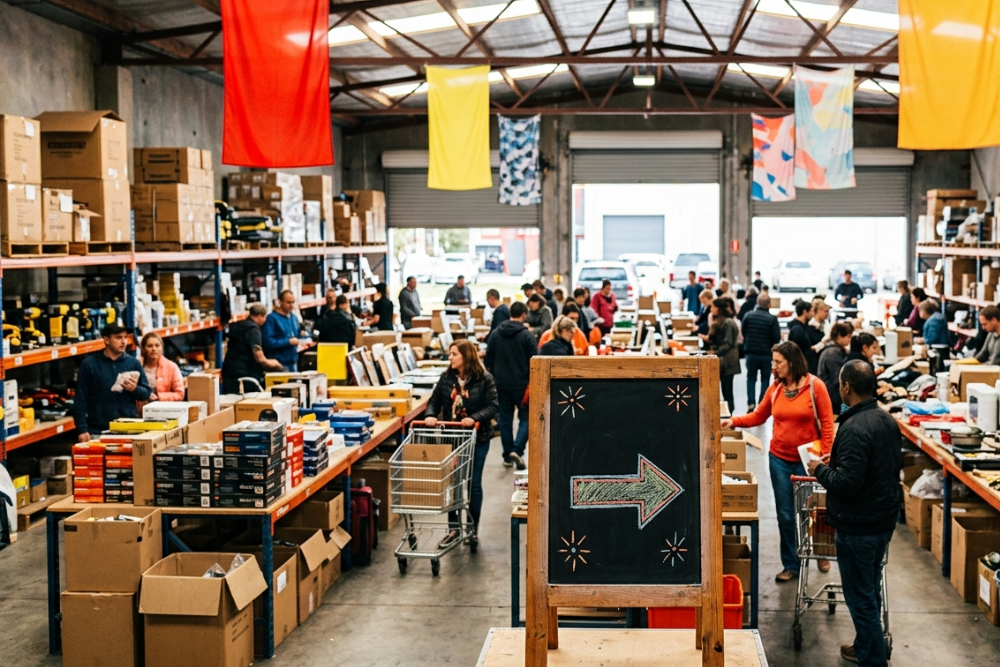
In cities like Montreal, Toronto, Calgary, or Vancouver, these temporary events frequently transform industrial spaces into buzzing commercial hubs, where well-known brands meet local SMEs.
The economic impact of this sector is often underestimated. Yet, with Canadian retail generating over $600 billion annually, warehouse sales form a dynamic niche representing hundreds of millions in value.
Companies like L’Oréal, OK Kids, or Canadian brands like Rudsak have discovered that these events are not just about liquidation—they’ve become full-fledged strategic distribution channels.
Understanding and mastering this market can be the difference between stagnant surplus and a profitable strategy that strengthens your brand. Beyond revenue, it activates a local value chain: temporary jobs, event services, space rentals, logistics, marketing. Each warehouse sale is a microcosm of the Canadian economy in motion.
How Does the Warehouse Sale Ecosystem Work in Canada?
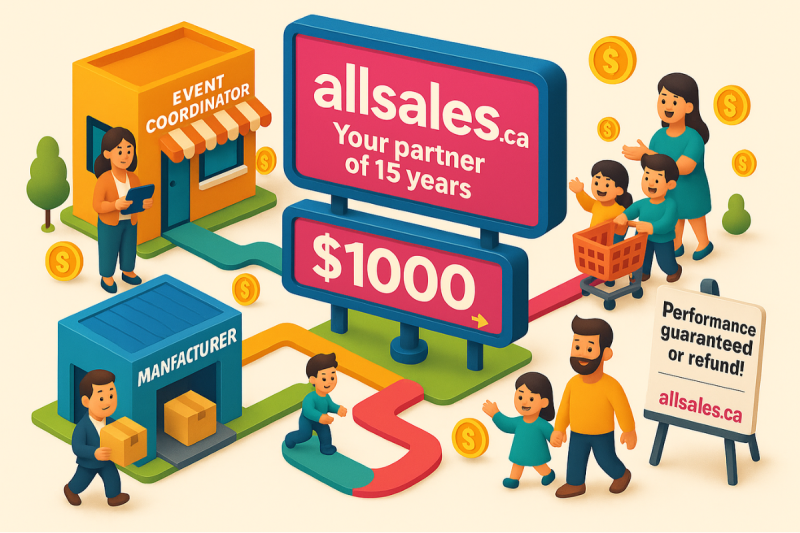
To grasp the scale of the phenomenon, it’s important to distinguish the various models that coexist. Not all warehouse sales are created equal—each serves specific business needs.
Single-brand sales are the classic model.
A business organizes the event to clear its own surplus. Brands like Rudsak may offer up to 80% off, while OK Kids runs promotions like “2 for $10.” The company maintains full control over pricing and branding.
Multi-brand mega sales are managed by firms like Premium Retail Group or Sample Sale Guys.
These large-scale events, common in cities like Montreal or Toronto, pool marketing and logistics costs and attract large crowds.
Online warehouse sales reflect the digital evolution.
Businesses create limited-time warehouse sale sections on their websites, using clear policies to reflect the liquidation nature.
Sample sales focus on prototypes and unique items, drawing in niche buyers.
This diversity comes with a full ecosystem of professionals. Event organizers manage logistics. Agencies like La Firme Événements provide staff and equipment. Platforms like LoopNet simplify temporary space rentals. Together, they fuel a parallel economy that supports jobs and generates income across communities.

How Can Your Business Benefit From This Growing Market?

If your business is sitting on surplus inventory, several strategies exist, each balancing risk, control, and investment:
Go independentand retain full control.
You manage the location, marketing, staff, and operations. Pros? You keep 100% of the profit and reinforce direct customer relationships. Cons? High upfront investment and full financial risk.
Join a mega-sale for instant access to large foot traffic.
Fees are offset by shared marketing and logistics costs. A great option for SMEs testing the waters.
Go digital by adding a temporary warehouse sale section to your website.
This reduces fixed costs and expands your reach. Platforms like CQCD’s “Rebond” even help liquidate B2B.
Your choice depends on your business objectives, risk tolerance, and budget. A first-time collaborative event is a great way to test the model before scaling independently.
Secrets to a Profitable Warehouse Sale
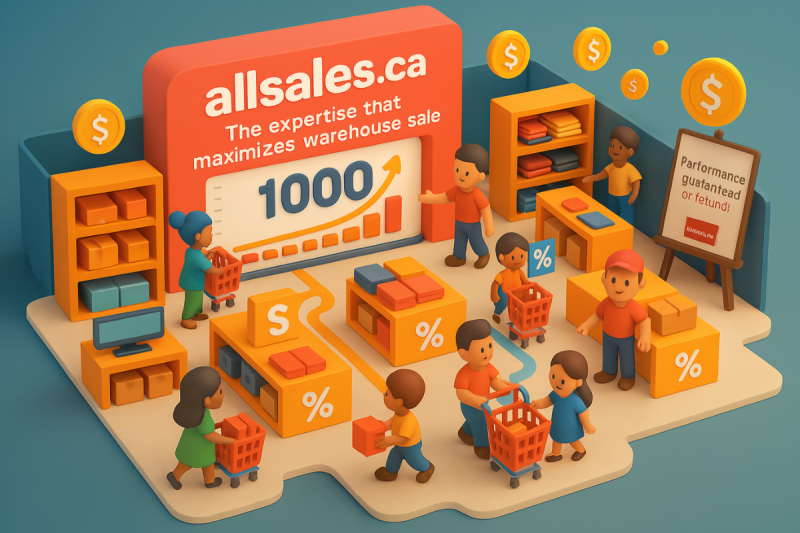
Success starts with flawless execution:
Location matters. Industrial spaces are affordable but less accessible; temporary retail spaces have better natural foot traffic.
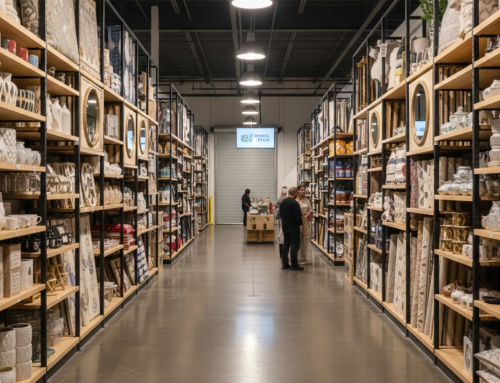
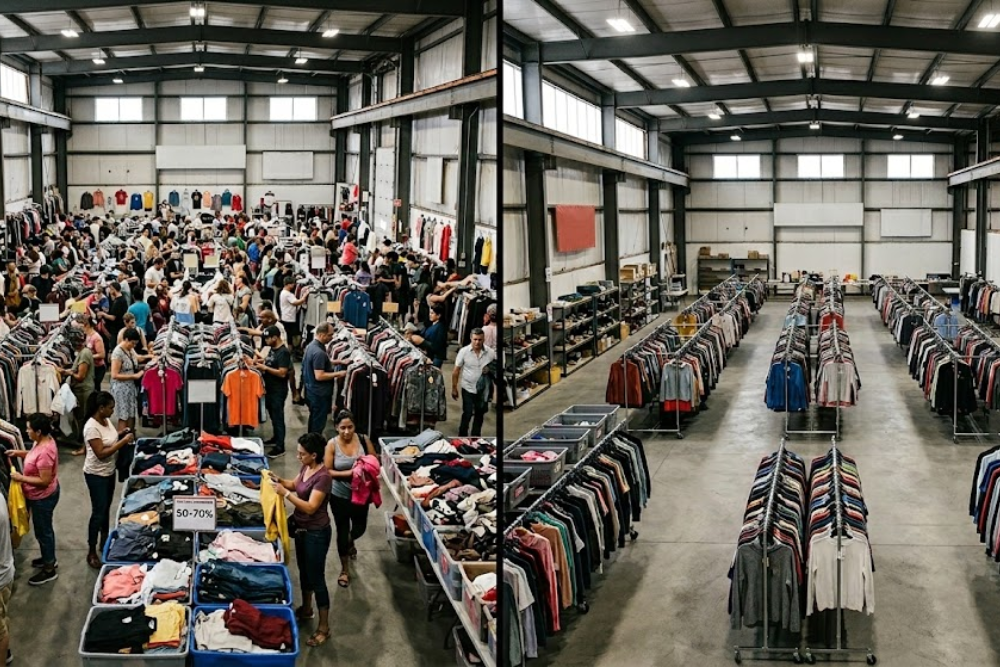
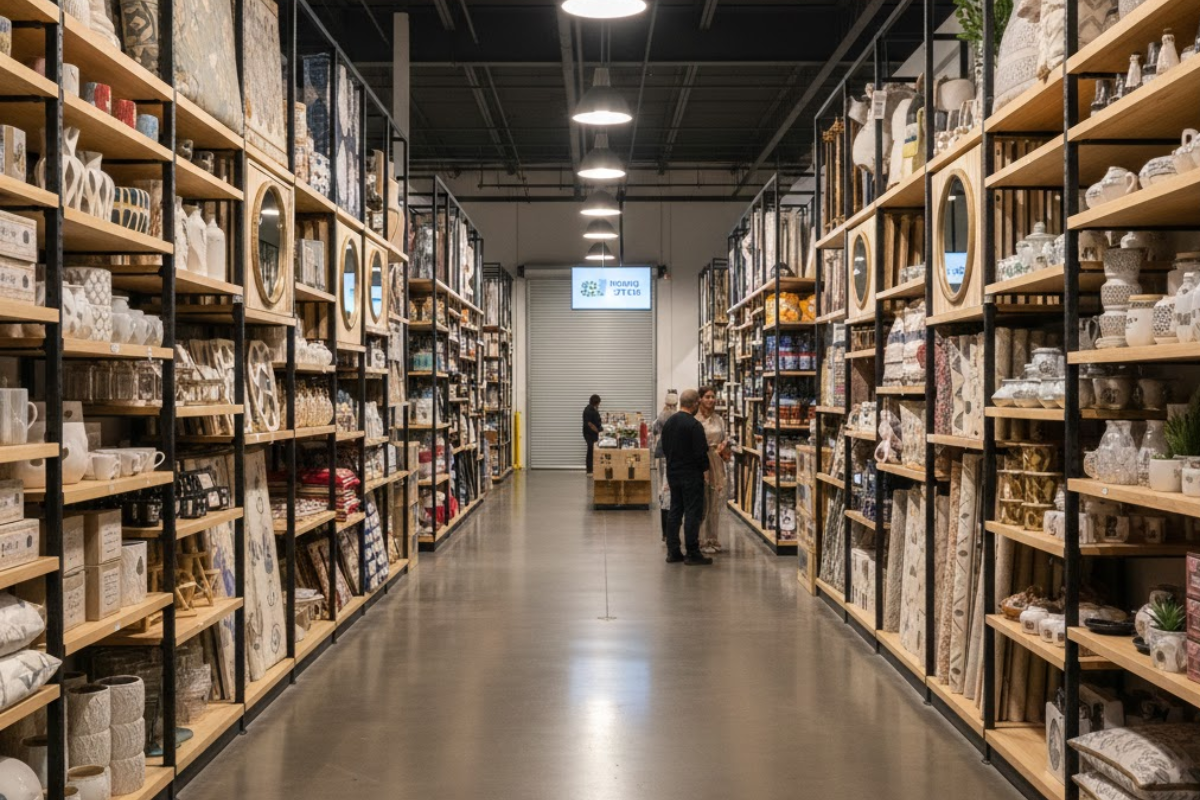
Layout is key. Wide aisles, intuitive paths, and clear checkout areas enhance the experience. Clear signage—even in a raw space—is essential.
Inventory management. Use FIFO (First-In, First-Out) for seasonal collections. Replenish in real time. “Final Sale” policies simplify post-sale management.
Marketing urgency. Start promoting weeks in advance. Use social media to build anticipation. Highlight urgency: “3 days only!” “Up to 90% off!” “Limited stock!”
Smart pricing. The goal isn’t margin—it’s volume. Use psychological pricing ($19.99 vs. $20) and anchored discounts. Bundle deals (2 for $35) boost cart value.
Event atmosphere. A motivated team, upbeat music, and frequent announcements keep energy high. Ensure fast checkout with enough terminals and all payment options.
The allsales.ca Advantage

This is where allsales.ca becomes your strategic partner.
With 15 years of expertise and a network of over 200,000 active buyers, we are Canada’s go-to platform for connecting businesses with eager deal-seekers.
Our turnkey promotional service transforms your warehouse sale into a high-impact event. Easily create your ad through our self-serve platform, reusing your visuals and copy. Once approved, we distribute it automatically across all key channels:
– Our high-traffic website
– Email to 71,000+ qualified subscribers
– Email notifications to opt-in buyers
– Social media posts
– Mobile app notifications
Flexible packages fit any budget—from a $145 Mini plan to premium options with guaranteed performance: 1,000 clicks or your next ad is free.
What’s our edge? Our audience is already in buying mode. These aren’t casual browsers—they’re looking for deals. Many clients say, “Our best results came from allsales.ca—even better than pricier platforms.”
Join us and gain from our trusted brand, recognized media coverage, and proven tools. We’re your partner in turning surplus into success.
The Future of Warehouse Sales in Canada

The warehouse sales market is at a turning point.
Inflation is pushing consumers to seek bargains. Businesses need smart ways to manage surplus. And trends show opportunity ahead:
Hybrid formats mix in-person with digital reach.
AI personalization could soon tailor alerts to individual shopper preferences.
Circular economy gains traction—warehouse sales support sustainability by reducing waste.
Strategic partnerships with influencers and complementary brands extend reach and appeal.
It’s time to stop seeing warehouse sales as last-resort clearance. With the right strategy and partners, your surplus can drive growth and customer retention.
Warehouse sales have proven resilient and vital to local economies. They create jobs, cut waste, and serve real consumer needs.
With allsales.ca, you’ve got the tools, team, and reach to turn your event into a brand-building machine.
Ready to turn surplus into success?
Frequently Asked Questions – Warehouse Sales for Canadian Businesses

Q: What is the best time to organize a warehouse sale?
A: Traditionally, the key periods were March–April–May and September–October–November. However, more businesses are now also holding sales in January, February, June, and July. Avoid competing with major discount periods like Boxing Day.
Q: How do I determine the right liquidation prices?
A: Aim for 50–80% off the regular price. The goal is to sell quickly, not to maximize margins. Test different discount levels by category.
Q: Do I need a special permit to hold a warehouse sale?
A: You must be registered with Revenu Québec and comply with local municipal regulations. Some cities require a temporary permit for commercial events.
Q: What opening hours should I prioritize?
A: Favor evenings and weekends to attract the largest number of customers.
Q: How do I choose the right location?
A: Choose a site with easy access, ample parking, and proximity to main roads.
Q: What merchandise and discount levels should I offer?
A: Offer recent, good-quality merchandise in sufficient quantity. Discounts should be realistic and competitive.
Q: How many cash registers should I plan for?
A: Base it on past sales. Always plan for additional registers in case of high traffic.
Q: What payment methods should I offer?
A: Offer cash, debit, and credit to reduce wait times and meet customer preferences.
Q: What are the key elements to include in my ad?
A: A clear headline, well-known brands, a truthful discount, the type of sale, a call to action, and a strong visual.
Q: How far in advance should I promote my sale?
A: Start two weeks before the event, and continue throughout the sale to maximize visibility and ROI.
Q: Why promote over a longer period?
A: The longer your campaign runs, the more visibility you get. Fewer days = fewer customers.
Q: What are the benefits of announcing in advance?
A: It allows customers to plan their visit and puts you ahead of your competitors.
Q: How can I effectively target my advertising?
A: Don’t rely solely on social media. Use specialized platforms and add a targeted email campaign.
Q: How can I optimize my advertising campaign?
A: Use multiple channels, invest based on your goals, and monitor performance to adjust strategy.
Q: How do I stand out from the competition?
A: Create urgency, offer exclusive deals, and use attractive visuals.
Q: Why should I repeat my advertising message?
A: Customers need to see your offer multiple times before acting. Repetition = retention.
Q: What’s the right media mix?
A: Specialized platforms + digital ads (lesventes.ca, Facebook, Google) + targeted email + website/blog presence.
Q: What are the pitfalls to avoid for a successful sale?
A: Don’t announce too late, don’t exaggerate discounts, don’t ignore competitors, and don’t skip performance tracking.
Q: How do I measure the success of a warehouse sale?
A: Beyond revenue, look at your inventory turnover rate, new customer acquisition, and the impact on your brand image.




Social Contact