
Why does one sale attract more than 1,000 customers while another, with similar products and comparable discounts, barely reaches 100? The honest answer to how to attract more customers to a sale is not a deeper discount, and it is not luck. It is execution.
In this case study, we break down two real-world scenarios — an average sale and a high-performing one — and isolate the differences that decide whether shoppers show up ready to buy or never hear about your event at all.
The takeaway is simple: a successful sale is not a better sale, it is a better executed one. Visibility, lead time and audience do most of the work — long before the doors open.
In this article
- 1. What does a sale that draws only 100 customers look like?
- 2. What does a sale that draws 1,000 customers look like?
- 3. Low vs high-performing sale: what really makes the difference?
- 4. How much lead time does a successful sale need?
- 5. Why does an existing audience give your sale a head start?
- 6. How can you attract more customers to a sale, every time?
What does a sale that draws only 100 customers look like?
A low-performing sale is rarely a pricing problem. It is advertised only two days ahead, shown on a single channel with few visuals, and never reminded. Customers have no time to plan, hesitate, and the turnout stays low — even when the offer itself is strong.
In our first scenario, the retailer did the following:
- Advertised the sale two days before it opened.
- Published very few product visuals.
- Posted on social media only.
- Sent no reminders.
The result: low foot traffic, hesitant customers, and an average sales performance. The problem was never the discount — it was the lack of anticipation, the limited visibility and the absence of customer preparation. For a deeper look at this exact pattern, see why your warehouse sales lack traffic (and how to fix it).
What does a sale that draws 1,000 customers look like?
A high-performing sale is “sold” before it even starts. It is advertised about two weeks ahead, promoted repeatedly across email, social and an external platform, and supported by strong photos and videos. Shoppers arrive prepared, ready to buy, with a higher average order value.
In our second scenario, the same kind of products and discounts were handled very differently:
- Advertised 14 days in advance.
- Promoted frequently, with repeated reminders.
- Backed by strong photos and videos.
- Exposed through email plus an external platform and multiple channels.
The result: high traffic, ready-to-buy customers and a strong average order value. The sale succeeded because it was prepared, repeated and positioned — not because the products were different.
Low vs high-performing sale: what really makes the difference?
Five execution factors separate a 100-customer sale from a 1,000-customer one: the volume of visibility, the quality of product visuals, the lead time given to shoppers, the quality of the traffic reached, and whether the sale starts from zero or from an existing audience.

| Execution factor | Sale that draws ~100 | Sale that draws 1,000+ |
|---|---|---|
| Lead time | Advertised 2 days before | Advertised 14 days in advance |
| Promotion frequency | One-off post | Repeated, with reminders |
| Product visuals | Few or none | Strong photos and videos |
| Channels | Social media only | Email + social + external platform |
| Audience | Starts from zero | Existing list + qualified platform audience |
| Traffic quality | Hesitant, random | Ready-to-buy, qualified |
| Result | Low traffic, average performance | High traffic, strong order value |
Two patterns explain most of the gap. First, visibility volume: high-performing sales multiply touchpoints, repeat the message and reach a wider audience, while weak sales lean on a single channel. Second, product visualization: showing products in advance reduces hesitation and speeds up purchases. No visuals, no desire.
You don’t create demand for your sale — you capture it.
How much lead time does a successful sale need?
Shoppers need time to plan, decide and allocate a budget. In our high-performing case, the sale was announced roughly two weeks ahead. Promote late and you lose customers who simply never got the chance to organize their visit — no matter how good the deal is.

Late promotion is one of the most common reasons a strong offer underperforms. Customers cannot rearrange a busy week at 48 hours’ notice. Build anticipation early and you turn a one-day event into a date your audience plans around. See our full playbook on how to create anticipation around your sales (and double your store traffic).
Why does an existing audience give your sale a head start?
Successful sales rarely start from zero. They tap email lists, customer databases and specialized platforms whose audience is already shopping for deals. That qualified traffic converts faster than random reach, because intent is already there before the sale opens.
Not all traffic is equal. High-performing sales attract deal-driven, ready-to-buy shoppers — qualified visitors rather than random clicks. The fastest way to reach them is to borrow an audience that already exists.
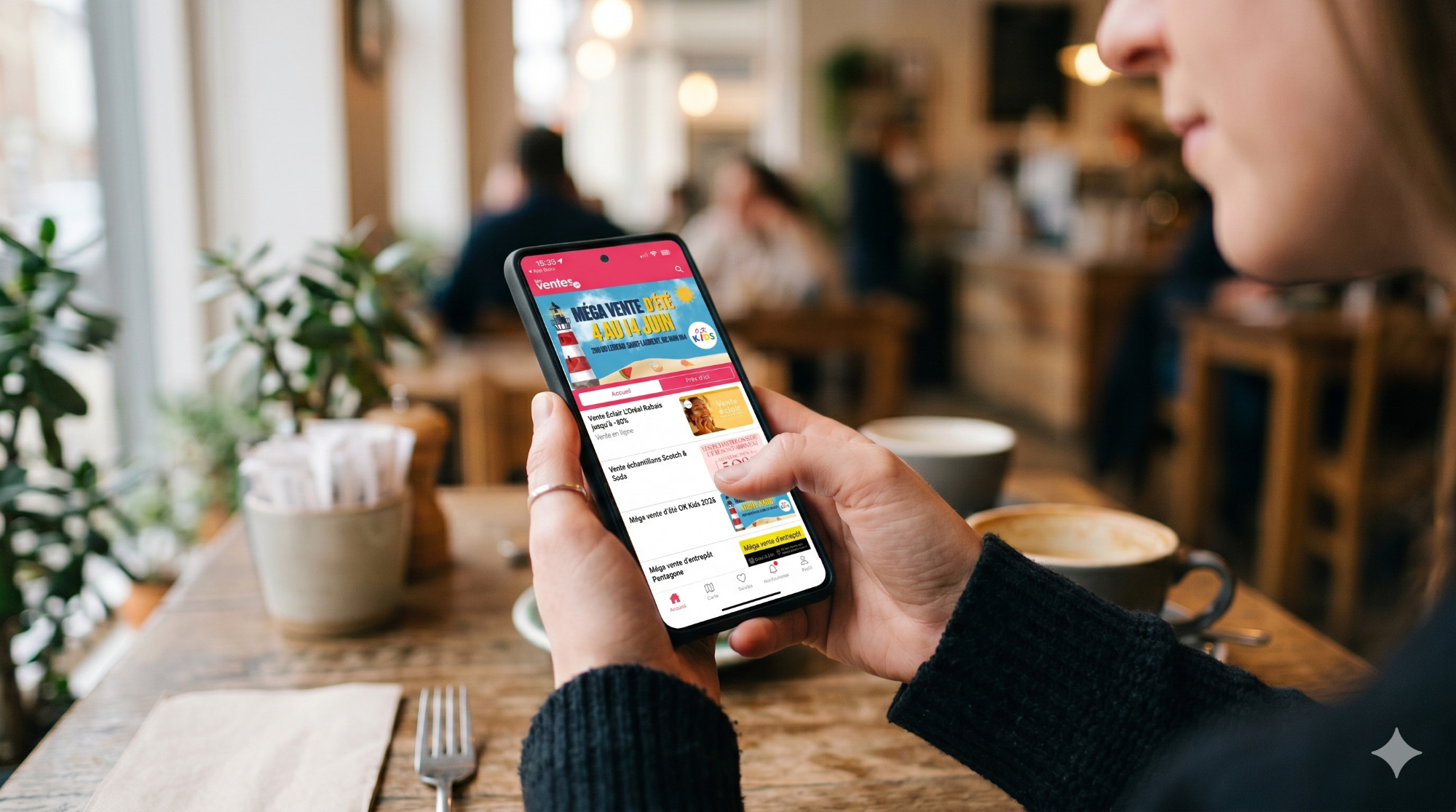
That is exactly what a specialized platform like allsales.ca provides. Through its website, mobile app and newsletter, allsales.ca connects you with 200,000+ Canadian consumers who are already looking for sales, across Canada — an audience with high purchase intent, ready to engage on day one.
How can you attract more customers to a sale, every time?
To attract more customers to a sale, focus on execution before discounts: announce early, repeat the message across channels, show products in advance, and reach a qualified audience that is already shopping. When these elements align, you get more traffic, higher conversions and stronger profitability.
When everything lines up, the results compound: more traffic, higher conversion rates, increased revenue and stronger profitability — without touching your margins. (For margin-friendly tactics, see how to maximize profits during sales without just lowering prices.)

The hidden mistake is interpretation. When a sale underperforms, most retailers conclude “my sale didn’t work.” In reality, it was not seen enough, not prepared properly, and not positioned effectively. The difference between 100 and 1,000 customers is not pricing — it is strategy.
Before improving your products or your discounts, improve how you present your sale.
Planning a sale?
Reach a qualified, ready-to-buy audience of 200,000+ Canadian consumers and turn your next event into a date your customers plan around.
Quick glossary for sale planners
- Touchpoint
- Any moment a customer sees your sale — an email, a social post, a platform listing. More relevant touchpoints mean more recall and more visits.
- Qualified traffic
- Visitors who are already shopping for deals and likely to buy, as opposed to random reach with no purchase intent.
- Lead time
- The number of days between announcing a sale and opening it. Enough lead time lets customers plan, decide and set a budget.
- Average order value
- The average amount each customer spends per purchase. Prepared, intent-driven shoppers tend to spend more per order.
Frequently asked questions
Why do two similar sales get such different turnouts?
Because execution differs, not the offer. Lead time, visibility volume, product visuals and audience quality decide attendance long before the discount does.
How far in advance should you announce a sale?
Give shoppers time to plan, decide and budget. In our high-performing case, the sale was announced about 14 days ahead, while the weak one was announced only two days before.
What makes sale traffic “qualified”?
Qualified traffic comes from shoppers who are already looking for deals and ready to buy — the kind of audience a specialized platform such as allsales.ca reaches across Canada.
About allsales.ca
allsales.ca & lesventes.ca is a digital media specialized in sales and promotions across Canada, since 2009. Through its website, mobile app and advertiser platform, it connects retailers with 200,000+ Canadian consumers who are actively shopping for deals.










Social Contact